
 Available in GB
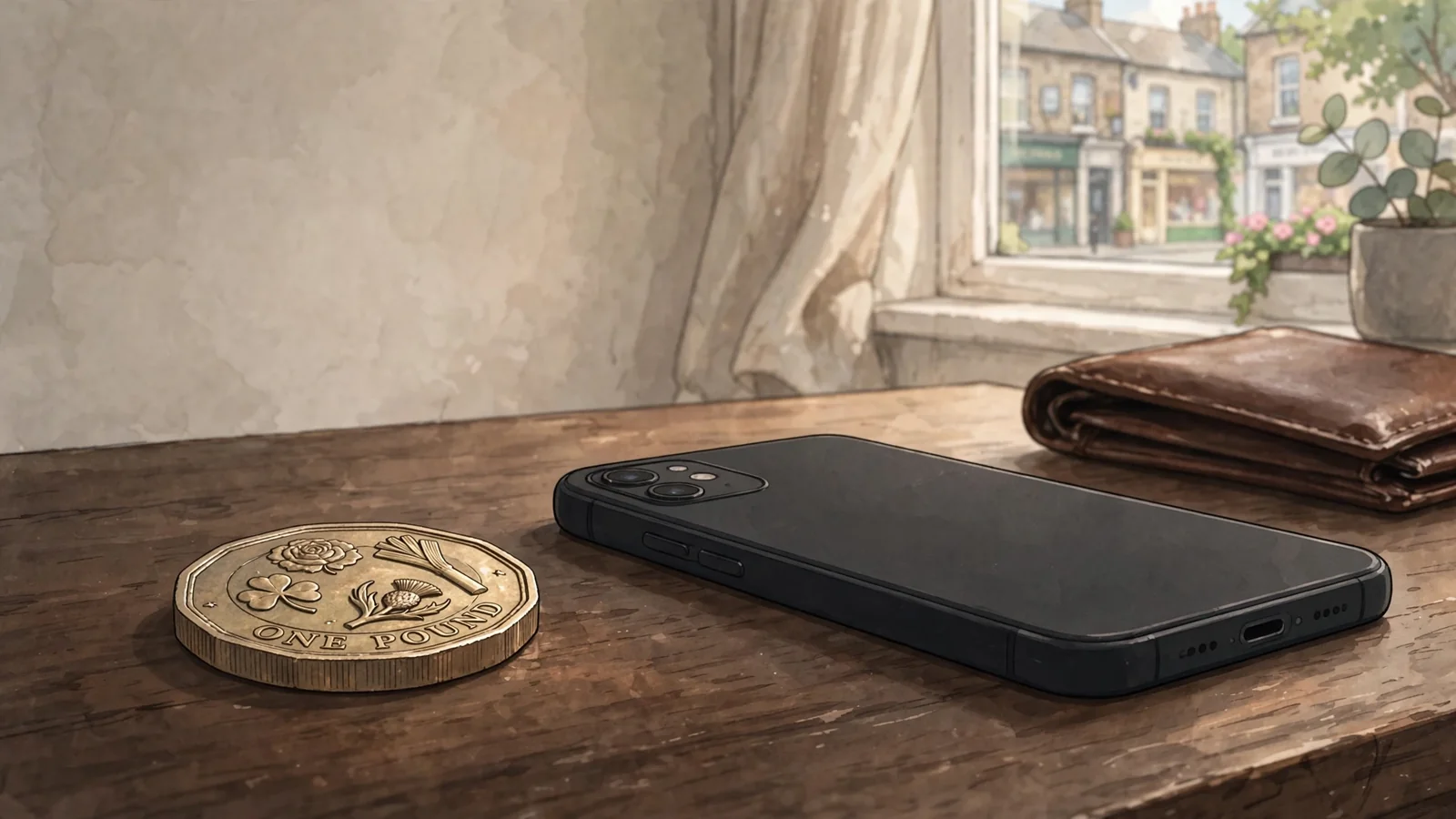
- What a £1 Minimum Deposit Actually Buys
- How Far £1 Goes on the Slots
- The 2026 Bonus-Wagering Cap Changes the Calculation
- Online Deposits: Eligible Payment Routes
- A £1 Real-Money Deposit Is Not a £1 Cash-Out
- GamStop Status Is Separate from the Deposit Minimum
- PayPal, Small Deposits and Payment Costs
- Low-Deposit Alternatives and Setting a Spending Limit
- Why a £5 Paysafecard Voucher Can Fund Smaller Deposits
- The £1 Cashier Minimum: What the Verified Example Shows
A £1 cashier minimum is only an entry threshold; offer eligibility, payment routes and withdrawal conditions can change what that deposit lets you do.
What a £1 Minimum Deposit Actually Buys
A £1 minimum deposit is a statement about the cashier, not a statement about the value of the account. It means that an operator has configured at least one available deposit route to accept a payment of £1. That is the entire promise contained in the figure. It does not, by itself, confirm that the payment qualifies for an offer, that every payment method accepts the same amount, or that the resulting balance can be withdrawn without meeting further conditions.
This distinction matters because “£1 minimum deposit casinos UK” can describe two different things. The first is a technical threshold: the smallest amount the cashier will process. The second is a practical entry point: the smallest amount that can be deposited and then used without the operator applying a separate condition. Those are not interchangeable descriptions. A cashier may accept the first pound while the promotional terms, payment rules or withdrawal rules treat that pound differently.
Some UK casinos do accept deposits starting at £1. A specialist review identified six UKGC-licensed casinos as accepting a genuine £1 minimum deposit at the time it was checked. That is useful evidence that the threshold exists in the British market, but it should not be treated as a permanent market ranking or a guarantee that the same cashier setting remains available. Operators can change payment methods, account terms and minimums. The relevant amount is the one displayed in the live cashier for the account and payment route being used.
Online Casinos with No Sister Sites in the UK
The word “genuine” is important. A site may describe itself as a minimum £1 deposit casino while the amount applies only in a narrow situation. The £1 setting might be available through one payment route but not another, or it might apply to an account configuration that has different terms from the advertised promotion. A page title can make the threshold sound universal; the cashier is the part that decides whether the transaction can actually be made.
There is also a difference between a casino accepting a £1 payment and a casino offering meaningful value for that payment. Acceptance places £1 into the gambling account. It does not turn the deposit into bonus funds, remove the operator’s account conditions or alter the rules attached to any later transaction. The deposit remains a cash balance subject to the operator’s terms. The fact that the first payment is small does not make the surrounding conditions small.
£20 Minimum Deposit Casinos in the UK
This is why lists of the “best £1 minimum deposit casinos UK” need to be read as lists of operators with a particular cashier threshold, not as automatic recommendations. The £1 figure alone cannot establish which site has the clearest terms, which payment routes are available, or whether a promotional offer is open to such a deposit. It is one field in the terms, not a complete assessment of the account.
Promotions are the most common source of confusion. A casino can accept £1 and still set a higher qualifying deposit for its welcome offer. In that case, the account receives the deposited money, but the promotional deal is not activated by that transaction. The words “minimum deposit” and “minimum qualifying deposit” describe separate conditions. Treating them as one condition produces a neat headline and an inaccurate calculation.
The same logic applies to free-play language. An offer associated with a low deposit may have its own eligibility rules, and the amount paid into the account does not automatically establish eligibility. A £1 deposit should therefore be assessed first as a real-money funding transaction. Any promotional treatment is an additional question governed by the offer’s terms.
The legal status also matters to the meaning of a UK-facing list. Real-money online casinos serving Great Britain must hold the relevant UK Gambling Commission licence, and online gambling is legal for players aged eighteen and over where the operator holds that licence. The presence of a £1 button in a cashier does not replace those requirements. A low threshold is a commercial setting, not a licence or a guarantee about the operator’s wider terms.
The clean calculation is therefore simple:
- £1 minimum deposit: the smallest stated payment accepted by the cashier or a particular payment route.
- Account balance: the money credited after the deposit is processed.
- Promotional eligibility: a separate question determined by the offer conditions.
- Practical value: dependent on the account and transaction terms, not on the size of the headline threshold.
That separation prevents the main misunderstanding around £1 minimum deposit casinos. The threshold can be real without being generous. It can provide a way to open play with a very small cash balance, while offering no special access to promotions and no exemption from the operator’s ordinary account conditions. The pound buys entry to the cashier’s minimum transaction; everything beyond that has to be established separately.
Recommended online casinos
- NightWinBonus: £900 + 400 free spins · Payout speed: 1-3 business days
- BritsinoBonus: Welcome Package – Get your £2,200 + 2,000 FS · Payout speed: 1-3 business days
- BeOnBetBonus: 100% up to €500 + 100 FS · Payout speed: 1-3 business days
- SpinFormulaBonus: 550% Up To £15,000 + 550 FS · Payout speed: 1-3 business days
- SlotoSportBonus: 500% up to £ 10 200+ 777 FS · Payout speed: 1-3 business days
- Revery PlayBonus: 100% up to€1,000+ 100 FS · Payout speed: 1-3 business days
- WinBeastBonus: €5000 + 500 FS + €650 Freebet · Payout speed: 1-3 business days
- ChanzeBonus: Slots Welcome Bonus #1 200% up to €500 · Payout speed: 1-3 business days
How Far £1 Goes on the Slots
A £1 balance is best understood as a number of stake units, not as a promise of lasting play. The cost of each spin determines how quickly that balance is committed. Many online slots available to UK players allow bets starting at £0.10 or £0.20 per spin, so the same deposit can produce very different amounts of play depending on the selected stake.
At £0.10 per spin, £1 covers ten spins if every spin loses. At £0.20 per spin, it covers five. That is the entire arithmetic before any winnings are returned to the balance. A low minimum deposit therefore creates an entry point, but it does not create a large session bankroll. The difference between the two stated stake levels is material: doubling the stake halves the number of losing spins that the initial balance can absorb.
At £0.10 per spin, £1 covers ten spins if every spin loses. At £0.20 per spin, it covers five.
The stake, not the deposit label, controls the pace
“£1 minimum deposit” describes the amount accepted by the cashier. It says nothing about the number of spins a slot balance can support. Once the money is in the gaming balance, the relevant figure is the selected bet per spin.
A £1 deposit used at £0.10 is divided into ten equal stake amounts. At £0.20, it is divided into five. If a slot offers both settings, choosing the lower one changes the pace of the balance without changing the amount deposited. This is why a comparison based only on the cashier minimum is incomplete. Two casinos could both accept the same £1 deposit while the practical playing time differs because the available games and their minimum stakes differ.
The calculation also applies when the balance is below a full pound. After a £0.10 spin, the untouched balance is £0.90. After a £0.20 spin, it is £0.80. Repeating the first stake leaves £0.50 after five losing spins; repeating the second leaves no original deposit after five. Nothing complicated is happening behind the screen. The account is simply being reduced by the chosen stake whenever a spin does not return enough to cover it.
A small balance leaves little room for variation
Slots do not return the same amount on every spin. A losing result reduces the balance by the stake, while a winning result may add funds back to it. A return can therefore extend play beyond the number of spins funded by the original deposit, but it can also be followed by further losing spins. The initial calculation remains useful because it shows the exposure before any result is known.
At the lower stated stake, ten losing spins consume the full £1. At the higher one, five do the same. If an early spin returns money, the balance may support additional spins, but those additional spins are funded by the result rather than by the original deposit alone. Treating a win as guaranteed extra playing time would turn a simple budget calculation into wishful accounting.
£2 Minimum Deposit Casinos in the UK: What to Know
The same point matters when choosing between games. A slot with a minimum stake of £0.10 permits the £1 balance to be spread across more individual spins than one requiring £0.20. That does not establish that the lower-stake game is more profitable or more likely to win. It establishes only that the starting balance is divided into smaller portions. Game outcome, return and frequency of wins are separate matters from the deposit size.
“Best” depends on what the £1 is meant to do
For a player assessing a legitimate UK minimum-deposit casino, the useful question is not whether the site displays a £1 entry figure. The useful question is whether the available slots allow that balance to be staked in manageable increments. A £1 balance paired with £0.10 spins has a different budget profile from the same balance paired with £0.20 spins.
That distinction is especially important when promotional language appears beside a small deposit. A £1 cashier minimum does not alter the price of a spin. Nor does the existence of a bonus change the underlying cost of each slot round. The balance still rises or falls according to the stake selected and the result produced. Promotional conditions are a separate calculation; they should not be used to inflate the apparent number of real-money spins supported by the deposit.
The term “online slots with a £1 minimum deposit” can therefore describe the funding threshold without describing the play experience. The play experience begins only after the stake is selected. At the permitted starting levels stated above, the raw balance arithmetic is clear:
| Stake per spin | Losing spins covered by £1 |
|---|---|
| £0.10 | 10 |
| £0.20 | 5 |
These figures are not forecasts of results. They are the maximum number of consecutive losing spins funded by the original pound at each stake. A win changes the balance; it does not change the cost of the next spin unless the stake is changed.
The practical reading of a £1 slot balance
A £1 deposit is therefore a small test balance, not a substantial slot budget. At £0.10 per spin, it provides ten stake units; at £0.20, five. The lower setting gives the balance more divisions and slows depletion when every result loses. The higher setting commits more of the balance to each individual round and reaches zero more quickly under the same losing sequence.
That is the meaningful distinction when examining the lowest minimum deposit casino options in the UK. The cashier figure tells how little can be placed into the account. The slot stake tells how far that money can go once play begins. Everything beyond that depends on the results of the spins, which no deposit label can guarantee.
The 2026 Bonus-Wagering Cap Changes the Calculation
Since 19 January 2026, gambling incentives offered by UK-licensed operators cannot impose bonus wagering of more than 10x the bonus funds. That is the important figure for terms applying in 2026. It changes the calculation behind any promotional offer, including an offer presented alongside a UK casino with a £1 minimum deposit.
A wagering requirement is a condition attached to bonus money before the related balance can be withdrawn. At a 10x requirement, the bonus amount must be wagered ten times before that condition is met. This is not the same as depositing money ten times, nor does it mean that the original deposit is automatically locked. It concerns the bonus funds and the play required under the promotion’s terms.
Wagering Requirement
A wagering requirement is a condition attached to bonus money before the related balance can be withdrawn. At a 10x requirement, the bonus amount must be wagered ten times before that condition is met.
The distinction matters because a small cashier minimum and a promotional requirement answer different questions. The cashier minimum states how little can be deposited. The wagering rule states how much qualifying play is required after bonus funds have been credited. A £1 minimum deposit casino may therefore allow a small payment while the associated incentive remains governed by the separate bonus conditions. The size of the deposit does not alter the statutory cap.
What the 10x limit means
The 10x ceiling applies to wagering requirements for gambling incentives. Since the rule took effect on 19 January 2026, a UK gambling promotion cannot require more than ten times the bonus funds to be wagered. A term demanding a higher multiple is not the 2026 benchmark for a British-licensed offer.
The calculation is straightforward in structure:
- identify the bonus funds covered by the promotion;
- apply the wagering multiple stated in the terms;
- complete the resulting wagering requirement before the relevant withdrawal condition is satisfied.
The limit is attached to the bonus, not to the deposit route. Whether the account was funded through a debit card, an e-wallet funded by debit, or direct banking does not create a different wagering ceiling. The payment method is not a way around the rule, and a £1 deposit does not reduce the requirement below the figure stated for the promotion.
The rule also does not turn bonus money into unrestricted cash. A wagering condition remains a condition even when the multiple is capped. The operator’s terms still determine which play qualifies and when the promotion ends. The cap limits the size of the wagering demand; it does not remove the need to comply with the rest of the offer.
Why older figures cause confusion
Bonus pages and casino articles can remain visible after their terms have changed. Older promotions were often described with higher wagering multiples than the current UK limit. Those figures may still appear in archived material, comparison pages or copied bonus descriptions, but they should not be treated as the applicable ceiling for incentives offered by UK-licensed operators in 2026.
This creates a simple dating problem. A higher multiple may describe an earlier offer, a historical article, or terms from a different regulatory setting. It does not describe what a current British-licensed gambling incentive may require after 19 January 2026. The date is therefore part of the calculation, not a footnote.
The same caution applies to wording that treats a bonus as “low wagering” without stating the actual condition. A £1 minimum deposit casino can advertise a small entry amount while the promotion has separate rules for bonus use. The deposit threshold is visible at the cashier; the wagering requirement sits in the promotion’s terms. Combining the two produces a misleading total.
£3 Minimum Deposit Casinos in the UK: What It Means
The bonus amount is the relevant base
The 10x rule concerns the bonus funds rather than the amount used to make the deposit. That distinction prevents a common arithmetic error. The deposit is not automatically the figure to which the wagering multiple should be applied merely because the deposit triggered the promotion.
The terms should identify whether the requirement is calculated against bonus funds, and the UK rule places the ten-times ceiling on that calculation. A promotional balance must therefore be assessed from the bonus component covered by the offer. The £1 figure belongs to the account-funding question; the 10x figure belongs to the bonus-wagering question.
This also explains why a low deposit does not make a promotion proportionally simple. The cashier may accept a small amount, but the bonus can still carry a separate play condition. The legal ceiling prevents the requirement from exceeding ten times the bonus funds, yet it does not promise that every deposit will qualify, that every game will contribute equally, or that the balance can be withdrawn immediately.
For a UK player comparing a 1 pound minimum deposit casino in 2026, the relevant check is therefore not just the number displayed beside “minimum deposit”. The promotional terms must be read for the wagering multiple and its stated basis. Since 19 January 2026, the maximum permitted requirement for bonus funds at UK-licensed operators is 10x. Anything higher belongs to an earlier or different context, not to the current British limit.
Online Deposits: Eligible Payment Routes
For a UK online casino, the payment method is not simply a matter of selecting the most familiar logo at the cashier. The source of the money matters. Gambling deposits must come from a permitted funding route, and the central restriction is the UK ban on credit-card gambling introduced in 2020.
The compliant routes are:
- debit cards;
- e-wallets funded with a debit card or another permitted source;
- direct banking from a bank account.
That framework applies whether the cashier minimum is £1, £5, £10 or another amount set by the operator. A casino advertising a £1 minimum deposit does not have permission to accept a credit card merely because the transaction is small. The amount changes the size of the payment, not the rule governing its source.
Debit cards
Debit cards are the most direct route for funding an online casino account. Visa and Mastercard debit cards are accepted almost everywhere in the UK market and support low minimum deposits, which is why they appear frequently when people look for an online casino with a £1 minimum deposit in the UK.
The important distinction is between debit and credit. A debit-card deposit draws on money already held in the linked bank account. A credit-card deposit relies on borrowing, and UK-licensed casinos cannot accept it for gambling. A card should therefore be identified by its funding type rather than by the card network printed on it. The Visa or Mastercard name alone does not establish that the card is suitable; the card must be a debit card.
The same principle applies at a new online casino as at an established one. A newly launched cashier cannot create an exception to the credit-card prohibition by offering a low deposit threshold or describing the payment as a special introductory route. The operator must apply the UK gambling payment rules from the first deposit.
E-wallets
E-wallets can be used for online casino deposits when the money inside the wallet comes from a permitted source, such as a debit card. The wallet is a payment layer, not a way to bypass the credit-card restriction.
This matters because the method displayed at the cashier does not always reveal the original source of funds. If an e-wallet permits credit-card money to be used for gambling, that wallet payment cannot be accepted for a UK gambling deposit. A wallet balance funded from a debit card is treated differently from a balance funded through credit.
The practical check is therefore two-stage:
- the casino must support the e-wallet;
- the money used through that wallet must not originate from credit-card funding.
PayPal is an example of a named e-wallet available as a payment service, but its presence in a cashier does not turn every underlying funding source into an eligible one. A payment route remains subject to the same source-of-funds rule when it is routed through an intermediary.
This is especially relevant to searches for a casino online with a £1 minimum deposit. A low cashier figure may be shown beside an e-wallet icon, but the transaction still has to be funded in a manner allowed for gambling. The stated minimum does not override the conditions attached to the wallet.
Direct banking
Direct banking deposits come from a bank account rather than from borrowed card credit. They are an eligible route for funding an account at a UK-licensed online casino. The method may be presented under different cashier labels, but the underlying principle remains the same: the deposit is drawn from an authorised bank-account route.
UK-licensed casinos cannot accept credit-card gambling deposits. This includes funds routed through a money service business.
Direct banking is separate from card processing and from e-wallet processing. A casino may offer all three, or only some of them. The availability of a £1 minimum deposit therefore does not imply that every payment method can be used at that level. The cashier determines which routes are open for the account and what conditions apply to each one.
There is also no payment-method loophole in which a bank deposit becomes a credit-card deposit merely because a credit card was used somewhere earlier in the chain. Conversely, a bank-account payment is not prohibited simply because it is made through an online banking interface. The relevant question is where the gambling funds come from.
The money-service-business rule
The credit-card restriction also covers indirect arrangements. Credit-card funding routed through a money service business cannot be used to finance gambling deposits. Sending credit-card money through another payment business does not change its character or make it acceptable at the casino cashier.
This closes the obvious workaround: a player cannot use a prohibited credit source, pass it through an intermediary, and present the resulting payment as though it were independent money. UK remote operators must reject credit-card gambling deposits whether the card is used openly or the funding is routed through a money service business.
The same logic applies to digital wallets that allow credit-card funds to be used for gambling. Renaming the route does not alter the source. A payment method is eligible only when its funding path is eligible.
What the cashier should show
A UK casino cashier may display several payment options, but the presence of an option is not a substitute for checking its funding conditions. For a small-deposit account, the permitted structure is straightforward:
- use a debit card rather than a credit card;
- use an e-wallet funded from a debit card or another allowed source;
- use direct banking from a bank account;
- do not route credit-card funds through a money service business;
- do not use a wallet that permits credit-card money to fund gambling.
The £1 figure answers only the question of how little the operator may accept through an available route. It does not answer whether the proposed source of money is lawful for gambling. That distinction is the entire payment calculation: the cashier minimum concerns the size of the deposit, while UK payment rules concern the origin of the funds.
A £1 Real-Money Deposit Is Not a £1 Cash-Out
A £1 minimum deposit answers one question only: how little money can be placed into the gambling account. It does not answer how little can be withdrawn. The cashier may accept a pound for a real-money deposit while applying a separate, higher threshold to withdrawals.
That distinction matters because a £1 balance can remain below the amount needed to request a payout. If the account contains only the original deposit, there may be no withdrawal available until the balance reaches the operator’s stated minimum. The deposit threshold is therefore an entry condition; the withdrawal threshold is a cash-out condition. They are separate lines in the terms, and treating them as identical is an expensive form of rounding.
Withdrawal Thresholds
Specialist reviews report minimum withdrawal thresholds of £10 to £20 at many UK casinos.
What the withdrawal threshold changes
A specialist review reports minimum withdrawal thresholds of £10 to £20 at many UK casinos. Under those terms, a £1 deposit cannot be withdrawn as a £1 balance. The account may show real money, and the funds may be available for play, but the cashier will not process a withdrawal until the relevant threshold has been met.
This does not mean every operator uses the same rule. Another specialist review states that debit cards and some e-wallets can support £1 deposits, while minimum withdrawals are set between £1 and £5. That range leaves a genuine possibility of withdrawing a small balance, but only where the operator, account and selected payment route all permit it. The payment method can therefore affect the practical result even when the initial deposit is the same.
The figures should be read as operator-specific terms rather than as a universal UK rule. A casino advertising a £1 minimum deposit can still set a higher cashier minimum for withdrawals. The relevant information is normally displayed in the banking or cashier section and in the withdrawal terms. A deposit page alone is not enough to establish whether a small balance can leave the account.
A simple balance test
The calculation is straightforward:
- Deposit: £1
- Cashier minimum: the amount stated by the operator
- Withdrawable balance: only a balance meeting that cashier minimum
If the cashier minimum is £1, a qualifying £1 balance may be eligible for withdrawal. If it is £5, £10 or £20, the balance remains below the payout threshold until it reaches that figure. Whether the balance gets there through play is a separate matter: games can reduce it as readily as they can increase it.
For a real-money £1 minimum deposit casino in the UK, the useful question is consequently not just whether the account can be funded with one pound. It is whether the same account permits a withdrawal at the resulting balance. The lowest entry point has value only when the exit condition is equally clear.
GamStop Status Is Separate from the Deposit Minimum
A £1 minimum deposit and GamStop status are separate account characteristics. The first describes the smallest amount accepted by the cashier. GamStop concerns self-exclusion from participating online gambling services. One does not establish the other.
That establishes the availability of the low cashier threshold, not whether those operators appear on GamStop, whether they accept customers who have registered with GamStop, or whether a site is outside the scheme. A list of £1 casinos therefore cannot be presented as a list of casinos not on GamStop.
Gambling Commission
Offshore casinos sit outside the UK regulatory system and do not hold a UK Gambling Commission licence.
The distinction matters because the wording “£1 minimum deposit casino not on GamStop” combines two different checks. The deposit check concerns the operator’s cashier terms. The GamStop check concerns the operator’s relationship with the self-exclusion service. A low entry amount is not evidence of exemption, non-participation or offshore status.
There is also a legal distinction. Real-money online gambling offered to customers in Great Britain requires a current UK Gambling Commission operating licence. Offshore casinos sit outside that regulatory system and do not hold a UK Gambling Commission licence. Their position cannot be inferred from a displayed £1 deposit option, and a low cashier minimum does not turn an unlicensed operator into a licensed one.
For a UK player, the sensible record for any individual casino has two separate fields:
- Cashier minimum: whether the account accepts a £1 deposit.
- GamStop position: whether the operator is covered by, or separate from, the GamStop self-exclusion service.
Those fields should not be merged into a claim that a particular £1 minimum deposit casino is “not on GamStop”. It does not identify which, if any, fall outside GamStop. Treating the two labels as interchangeable would turn a payment condition into a responsible-gambling classification, which is not a calculation the terms support.
PayPal, Small Deposits and Payment Costs
PayPal can appear alongside cards and other e-wallets when comparing a small-deposit casino, but the presence of PayPal in a cashier does not establish a £1 minimum deposit. The available threshold is set by the operator and may also depend on the payment route selected. A casino may therefore support PayPal while applying a different minimum to that wallet than to a debit card.
At a particular UK operator, the cashier minimum is generally aligned across the available payment methods. That is not an absolute rule. Some operators impose a higher threshold on direct banking than on cards or e-wallets, so a small deposit may be possible through one route but unavailable through another. The payment screen, rather than the mere appearance of a method in the casino’s list, determines the applicable condition.
Cost matters more when the deposit is small. A flat charge removes the same amount from a transaction regardless of its size. A specialist review has reported payment-provider fees of £1 to £3 for some transactions. That figure is not a universal PayPal charge or a fixed UK casino tariff; it is a reported range attached to particular providers and arrangements. The relevant terms are those shown before confirmation, including any fee charged by the payment service and any separate condition imposed by the operator.
For a £1 deposit, a £1 fee would equal the deposit itself, while a £3 fee would exceed it. That makes the payment cost more important than the nominal cashier minimum. A route with no stated charge may therefore be financially different from one that accepts a small amount but adds a fixed transaction cost.
PayPal should consequently be assessed on three separate points: whether the operator accepts it for UK accounts, what minimum applies to that wallet, and whether the transaction carries a fee. None of those points can be inferred solely from the existence of a £1 cashier option elsewhere at the same casino.
£4 Minimum Deposit Casinos in the UK: What to Know
Low-Deposit Alternatives and Setting a Spending Limit
A £1 cashier minimum is the lowest end of the UK market, but it is not the only low-deposit option. A specialist review of UK casino terms places direct banking deposits at a £10 minimum in the typical case, with some operators setting the threshold at £5 and others at £20. The difference matters because the deposit level determines how much money enters the account before any play begins, not the quality or value of the games.
A £5 deposit can therefore be a practical middle ground where a £1 transaction is unavailable. At £10, more operators become available under the cited comparison, while a £20 minimum is a clear barrier for anyone testing a casino with a tightly controlled balance. The label “low deposit” covers all of these levels, but the cash commitment is not the same.
Promotion terms require separate checking. A specialist review reports that many UK casinos do not count £1 deposits towards welcome offers. Some also restrict particular payment methods at that level. A technically successful deposit can consequently fund an account without activating a promotional deal. That is a condition of the offer, not a contradiction in the cashier.
Anjouan Casino Licence in the UK: What It Means
Financial control should be set before the first deposit. UK-licensed operators must prompt a new customer to establish a financial limit before accepting that initial funding. Account-level controls must remain accessible afterwards, allowing the selected limit to govern future spending. This is especially relevant when the deposit threshold is small: repeated £1 transactions can still increase total expenditure, while the headline cashier minimum makes each individual decision look harmless. Age verification is also required before depositing, and real-money play is restricted to customers aged 18 and over.
Why a £5 Paysafecard Voucher Can Fund Smaller Deposits
A £5 Paysafecard voucher is not the same thing as a £5 minimum deposit. The voucher has a fixed purchase value, while the casino cashier determines how much can be added to the gambling account in each transaction. Where Paysafecard is available and the cashier accepts a smaller amount, one £5 voucher can therefore support several separate low-value deposits.
That distinction matters when comparing a £1 minimum deposit casino in the UK with the price of the payment instrument. A £1 cashier minimum describes the amount credited to the account in one deposit. It does not mean that Paysafecard is sold as a £1 voucher. Paysafecard is issued in fixed denominations of £5, £10, £25, £50 and £100.
No Minimum Deposit Casino UK: What £1 Means
The unused value remains relevant after a smaller deposit. A single voucher can fund several small deposits rather than requiring the entire voucher amount to be committed at once. The available balance is therefore a payment resource, not evidence that the casino has raised or lowered its cashier minimum.
The practical check is made at the payment stage: the operator must list Paysafecard as an available route, and its cashier must accept the intended deposit amount. A £5 voucher can make a £1 minimum deposit possible without changing the casino’s published threshold. Conversely, possession of a £5 voucher does not turn a casino with a higher minimum into a £1 minimum deposit casino. The two figures belong to different parts of the transaction: one is the voucher denomination, the other is the operator’s cashier rule.
The £1 Cashier Minimum: What the Verified Example Shows
A genuine casino with a £1 minimum deposit in the UK is a narrower category than the label suggests. The relevant figure is the cashier minimum: the smallest amount the operator permits for a deposit into a UK account. It is not the minimum needed for a welcome offer, and it does not describe the amount that can later be withdrawn.
A specialist casino review identifies NetBet as the only UK Gambling Commission-listed casino in its comparison with a £1 cashier minimum. That is a specific verified example, not evidence that every payment route or every account will display the same threshold indefinitely. The cashier remains the place where the applicable minimum is confirmed before a transaction is submitted.
The comparison also shows why operator names need to be separated from the £1 claim. The same review gives Zodiac, Luxury Casino and UK Casino Club a £10 minimum for UK accounts. Those operators are therefore not casinos with a £1 cashier minimum, regardless of whether a general low-deposit description appears elsewhere. The review also records no sign-up bonus for those three casinos.
The financial distinction is plain. At NetBet, the stated threshold permits a £1 deposit. At the three higher-threshold examples, the account minimum is £10, and the recorded absence of a sign-up bonus removes any promotional reason to treat that deposit as an entry ticket to an offer. A £1 cashier minimum is therefore a precise account condition, not a promise of bonus eligibility.
What is the lowest deposit available at UKGC-licensed casinos?
The lowest deposit tier is £1, although it is rare and may be limited to specific payment methods such as Boku or Payforit.
What is the maximum wagering requirement in Great Britain?
Since 19 January 2026, gambling incentives in Great Britain cannot require more than 10x wagering of bonus funds.
Can I use a £1 deposit to claim all welcome bonuses?
No. Welcome offers typically require a £5 to £10 deposit, so a £1 payment usually will not qualify.
Can I use a credit card at 333 Casino in Great Britain?
No. Credit cards cannot be used for gambling deposits in Great Britain; deposits must come from debit cards, e-wallets funded by debit, or bank accounts.